May 31, 2014

Book Review: Under a Monsoon Cloud by H. R. F. Keating

I picked this book up because I had seen the seriously hilarious movie "The Perfect Murder" based on a book of the same name by Keating. If you haven't seen the movie, do go ahead and watch it... It is one of those lesser known gems of Indian Cinema.

However, this was the second time that a Merchant Ivory film led me to buy another book written by the author who had originally birthed the (Merchant Ivory) movie script and left me somewhat disappointed. (The other pair being a delightfully delicious movie called ‘The Householder’ and an incredibly underwhelming book called ‘Heat & Dust’ by Ruth Praber Jhabwala, who had also written the book – “The Householder”.) “Under a monsoon cloud” is much better than “Heat & Dust” but it is still relatively underwhelming when you compare its material to the delightfully timeless movie (“The Perfect Murder”). Keating does describe the India of a generation ago and the scruples of the average Indian family man in Inspector Ghote beautifully but the plot never really takes off.

The only reason I liked the book even though the plot never really got interesting enough was for Keating’s writing style and his creation of the honest middle class police inspector, which made me nostalgic of the simpler times India had, decades ago.

May 30, 2014

Book Review: The Horse Whisperer by Nicholas Evans

I picked up the book from a second hand book shop having heard the name somewhere; probably because the book has been made into a movie. I do not know the criteria on which books are chosen for being made into movies - but the common thread through all movies made from books is usually a good story. Sadly, 'The Horse Whisperer' does not have a story.

What it has is one decently OK character, namely 'The Horse Whisperer', a man who trains/ heals horses. After a bad road accident in which her horse and daughter are injured, a woman drives to a faraway ranch to seek the services of the titular character. Horse and daughter heal, woman has affair. Period. That is the story.

The only interesting part of the book was the accident itself and it all went downhill from there - the rest of it reading like a blog from the life of a bored housewife intent on having an affair. I finished the book and did not understand what the point of the story was.

Avoid both... the book and the movie.

Book Review: Theodore Boone by John Grisham

John Grisham has the uncanny knack of writing both incredibly good books and incredibly pedestrian ones. Theodore Boone, sadly, like 'King of Torts' and 'Summons' is one of the incredibly pedestrian ones.

It took me a year to read this not very thick book, in which time I finished several other books. Considering the premise was an underage legal mastermind, I was expecting some on the lines of Artemis Fowl. But the book was so undercooked and the 'hero' so average, I regretted purchasing it for full price from an airport book store.

But I am still thankful for the book... for it has severed my chord with Grisham forever - I think. He did write my favorite book ever ('The Rainmaker') but if you are going to write something as pedestrian as Theodore Boone, you will lose the most loyal of fans.

May 21, 2014

Book Review: Unaccustomed Earth by Jhumpa Lahiri

This was the first Jhumpa Lahiri book I read and from the get go, I was enchanted by the poetry of Lahiri’s prose. It is a little difficult for people who have grown up reading Jeffrey Archer’s short stories – people like me who expect every story to have a beginning, a premise and an end – to fully appreciate Lahiri’s work. Fortunately, I had been softened by Arundhati Roy’s and Rohinton Mistry’s works; so the disparity didn’t strike me that hard.

What strikes a chord when reading Lahiri’s work is the everyday-humanness of her stories. You feel for every character, you ache for all of their aches, you understand their sorrows and joys and finally, at the end – there is this stillness, this nothingness, reminding you that all her stories are like life itself. Not everything in life has an ending – happy or otherwise. Reading Lahiri for me was like inhaling an intoxicant; I felt heavy hearted yet light headed. The profound beauty of Lahiri’s prose, the humanness of her characters – all of whom felt like a long lost uncle or aunt or one’s own father or mother or a distant version of oneself - was heart rending.

I often amuse (/fool) myself with my ability to learn from and mimic the writing style of authors; but I am sure I cannot mimic the beauty of Lahiri’s work without going through some life experiences myself.

Deeply moving.

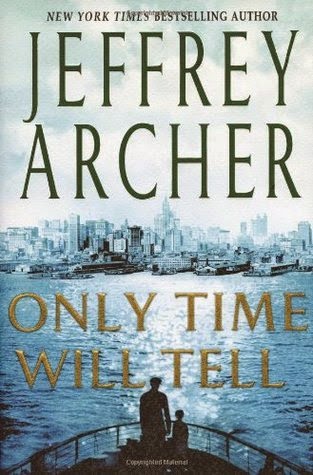
Book Review: Clifton Chronicles by Jeffrey Archer

Reading "The Clifton Chronicles" is like reading the history of the Nehru/ Gandhi dynasty. It starts off somewhat mundane, becomes mildly interesting, a few scandals erupt and thereafter with each coming generation, it becomes more and more boring.

Archer is a master at writing stories about characters developing over decades, as he demonstrates in his masterpiece “First Among Equals” but he seems to have bitten off more than he should have chewed with “The Clifton Chronicles”. The first book is soap-opera-ish with bastard sons, dalliances, mysterious disappearances and the sons of enemies becoming friends, etc. But what keeps the first book going is the deliciously dark character of Hugo Barrington, who is undoubtedly the most interesting character in the series.

Book One ends dramatically, compelling people to invest themselves in the second of the series. However, the drama soon peters off towards the end of Book Two and Book Three was so boring that I could not go beyond the first chapter.

If you want to read Jeffrey Archer, there are better books out there.

If you want to read a book series, there are better books out there.

May 19, 2014

Book Review: Hunger Pains by The Harvard Lampoon

I was fooled into buying this book by its blurb, a few surprisingly good reviews on Goodreads and a great discount on Amazon.

While readable, the book is not laugh-out-loud funny. It does have some things going for it like the wacky names (eg: Haymitch Abernathy’s character is called "Buttitch", Katniss’ character is called “Kantkiss Neverclean”) and a few funny set pieces. However, I expected to read a serious parody of the Hunger Games and not an desperate attempt to be funny in every sentence, which the book eventually becomes. But I think what put me off (as it will almost everybody who reads it) is the incredible dumbness of Katniss/ Kantkiss’ character; it was simply too hard to accept and even if it was needed to be done, required much more finesse.

Read it, strictly if you are a Hunger Games fan.

Book Review: The Accidental Prime Minister by Sanjaya Baru

I finally finished the book that has had tongues wagging from South Block to South India and also, possibly contributed maybe ten odd incremental seats to the NDA. Baru begins the book by justifying his reasons for writing the book (i.e. showing Manmohan in a better light than the internet jokes circulated about him), using the example of foreign civil servants chronicling their service periods with politicians. It is a tragedy that more civil servants do not write about their life and times. I would love to read what the secretaries of Indira or Sonia had/ have to say about them.

What makes ‘The Accidental Prime Minister’ most interesting is that it is a fly on the wall account of Manmohan Singh’s Prime Ministership. Baru quit the PMO before UPA 2 began; so the account is of the relatively rosier times of UPA 1. However, the book helps one understand where the skeletons that came out in UPA 2 originated. Baru writes quite frankly about the politics of the PMO – the power struggles between PMO officials – and also reveals Sonia’s attempts to pseudo-run the government through the NAC. What strikes one most when reading the account is that Manmohan was actually a brilliant tactician but what dragged him down was an inherent inability to speak effectively in public. His ability to swing the 123 Nuclear Deal with the US and the elaborately intricate maneuvers he resorted to in pushing the deal through, do help one absolve Manmohan of the stains he had suggested “history” would do for him.

The book becomes something of a drag towards the end with the Nuclear deal part getting over-elaborated. After a point, it seemed like the book was more about the Nuclear deal than Manmohan. But the book is voyeuristic enough, throughout its entirety, to be interesting.

Readable but not a must read... still, the book needs to be read to understand the history of UPA I and how it let our nation down.

May 18, 2014

Rahul lauds Congress’ escape velocity in 2014 elections, declares he shall form government on Jupiter

Dear Rahul, this is where you can go for a holiday now...


10 Janpath, Delhi: After his official press conference with mummy Sonia Gandhi in which he took responsibility for Congress’ defeat, Rahul Gandhi had another impromptu press conference when he barged into a news studio, declared the Modi wave ‘nonsense’ and most importantly grinned wildly. He also grabbed a laddoo from a reporter, saying he needed a ‘power laddoo’ to answer the reporters’ questions, whatever that meant.

“That is why I was smiling so much in the press conference with my mother,” Mr. Gandhi added. “I knew something the mediapersons did not. With this emphatic historic loss, Congress party has attained the escape velocity it needed to expand its politics to other planets.”

When asked which planet he was mulling the next Congress government on, Rahul thought for a few minutes, rolled up his sleeves, rolled them down, put his hands on his waist, put them in front of his groin and only then replied. “Mighty Raju has gone to Rio but I think we will go to Jupiter,” he said, grinning from ear to ear.

http://my.fakingnews.firstpost.com/2014/05/18/rahul-lauds-congress-escape-velocity-in-2014-elections-declares-he-shall-form-government-on-jupiter/

May 17, 2014

Book Review: Jaane Bhi Do Yaaron by Jai Arjun Singh

I picked this book up at the Bombay airport a few years ago and read it on my journey to Delhi. At that point, I just remembered ‘Jaane Bhi Do Yaaron’ as the movie that had that timelessly funny Mahabharat scene, which as college students we would watch on loop sometimes, on Youtube. The rest of the movie was a blurry memory for me (even though I had seen it).

Jai Arjun Singh, however, clearly loved the movie with a passion much more infinite than the average Indian. And he does a great job in researching the origins of the movie and decoding the madness behind it. What comes out in the end is a masterpiece – an incredibly funny book – something I dare say might even be funnier than the movie. In any case, if you have seen the movie, you need to read this book to understand the movie.

The funniest parts for me were the revelation that the Indian Government (NFDC) was the sole sponsor of the movie (Surprising, isn't it?) and the revelation that there was a role played by Anupam Kher in the movie (as an extremely myopic assassin called ‘Disco Killer’) which was eventually edited away. Kher is supposed to be a crack assassin but all he can do is shoot mangoes off the tree under which Naseeruddin’s and Ravi’s characters were chatting.


I dare say I was surprised that the book was such a page turner. Highly recommended.